

Rhinoplasty in Porto
Rhinoplasty in Porto with Prof. Dr. Miguel Gonçalves Ferreira, at the Clínica do Nariz e Face practice at 52 Clinics.
Nose Surgery in Porto
Rhinoplasty in Porto: Nose Surgery
In Porto, Clínica do Nariz e Face has its practice at Rua Orfeão do Porto, 52 (52 Clinics). This is where Prof. Dr. Miguel Gonçalves Ferreira sees everyone looking for a rhinoplasty in Porto, for a detailed consultation before any decision.
A specialist in Otolaryngology and Facial Plastic Surgery, Prof. Dr. Miguel Gonçalves Ferreira has been operating since 2001 and has performed more than 9,000 rhinoplasties. As an ENT surgeon, he assesses the shape of the nose and the breathing in the same consultation.
In primary rhinoplasty, the technique of choice is preservation rhinoplasty. Prof. Dr. Miguel Gonçalves Ferreira developed the Spare Roof Technique, a dorsal preservation technique he has taught to surgeons from over 40 countries: the nose gains a new shape while keeping its natural “roof”. Surgeries take place at Hospital da Luz Arrábida, in Vila Nova de Gaia, and at Hospital da Ordem de S. Francisco, in Porto.
Aesthetic Nose Correction
Rhinoplasty Before and After
Aesthetic Nose Correction
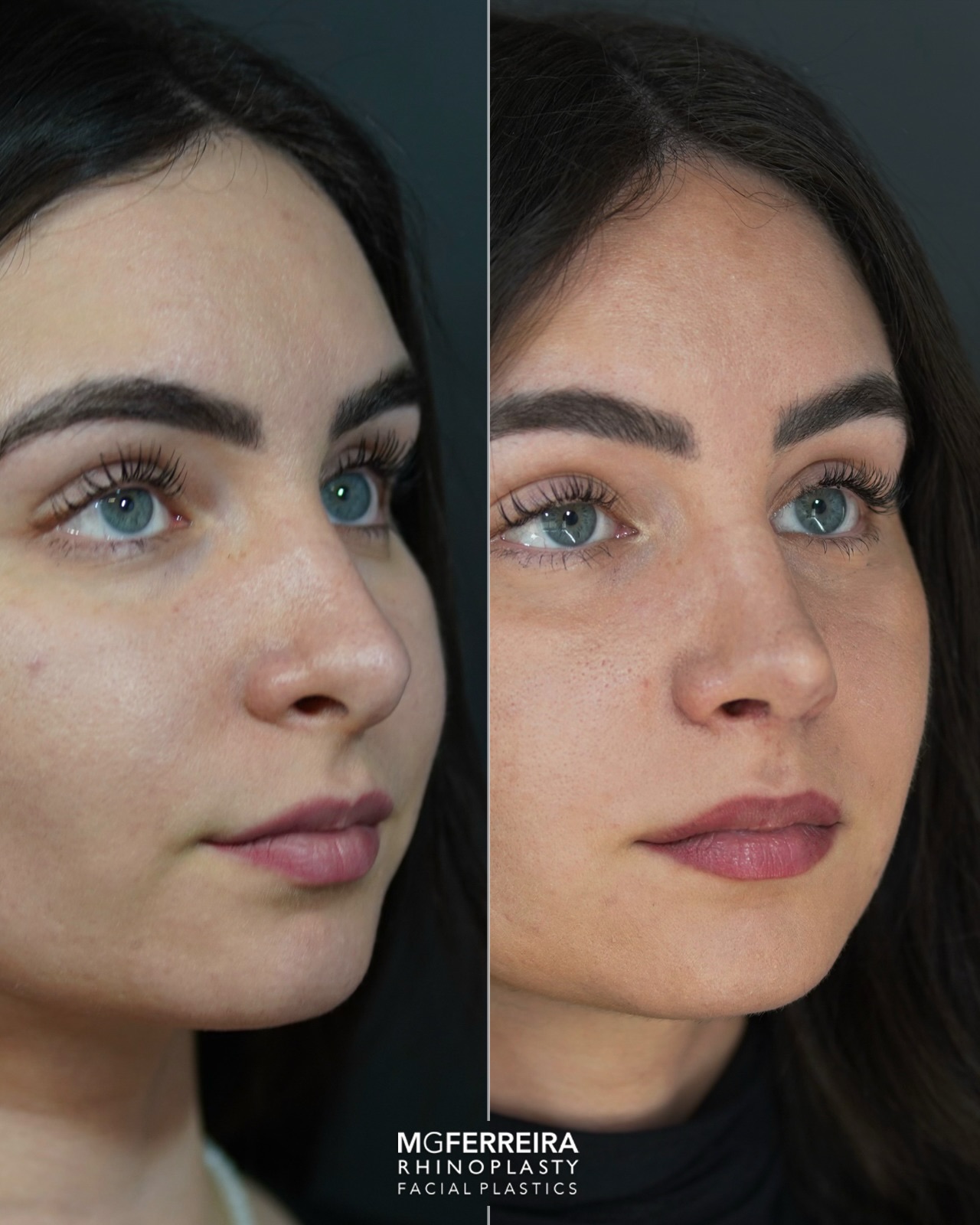
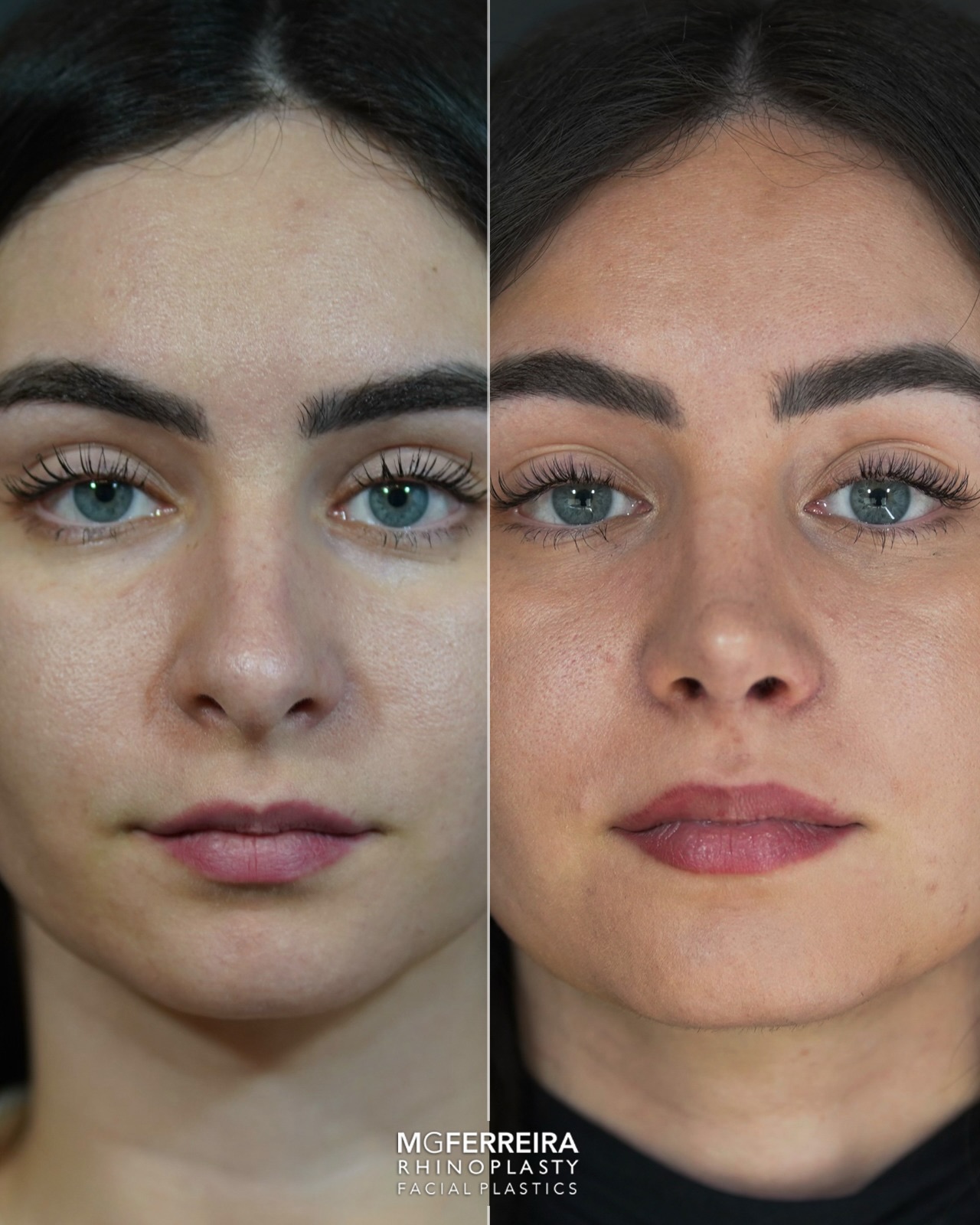
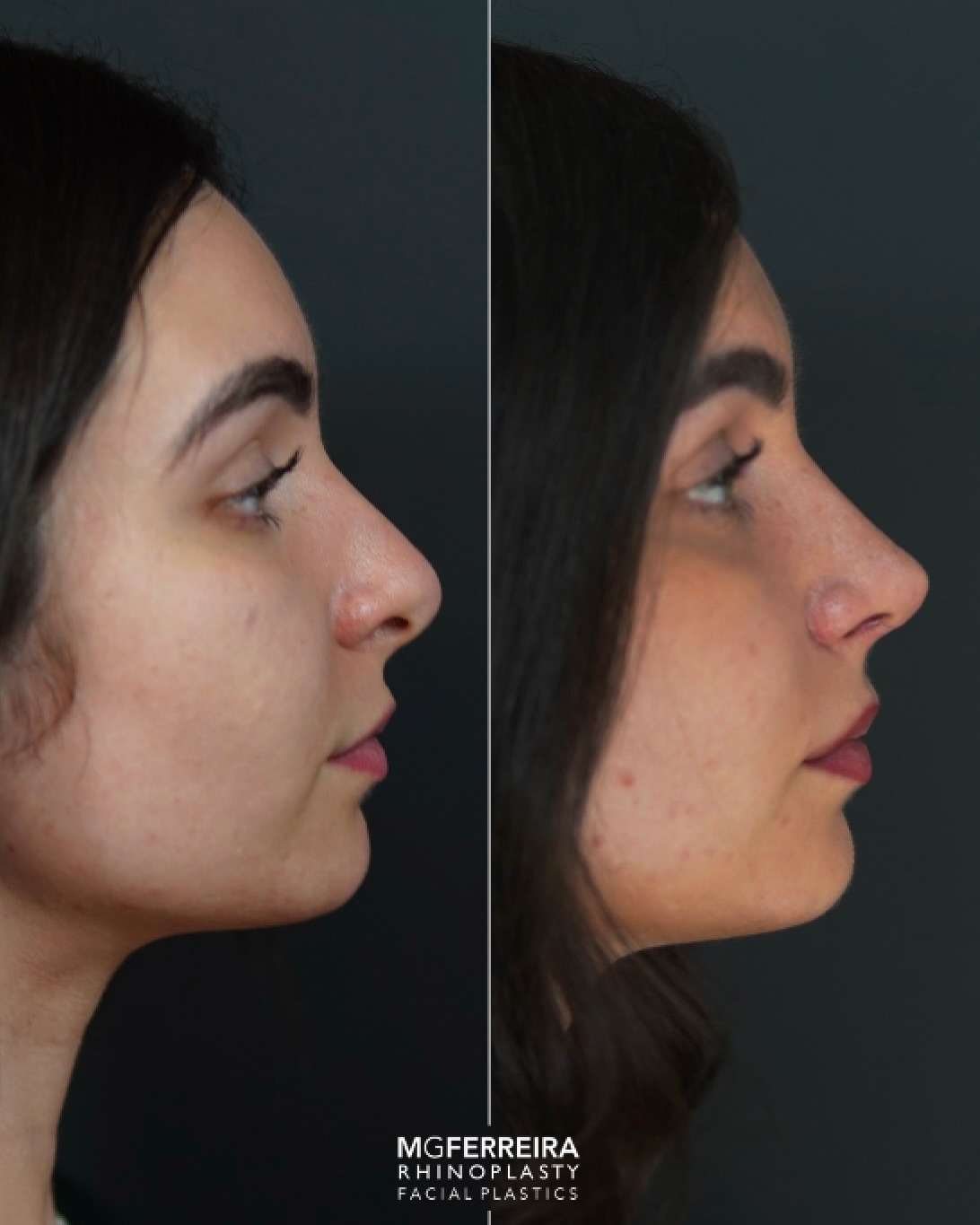
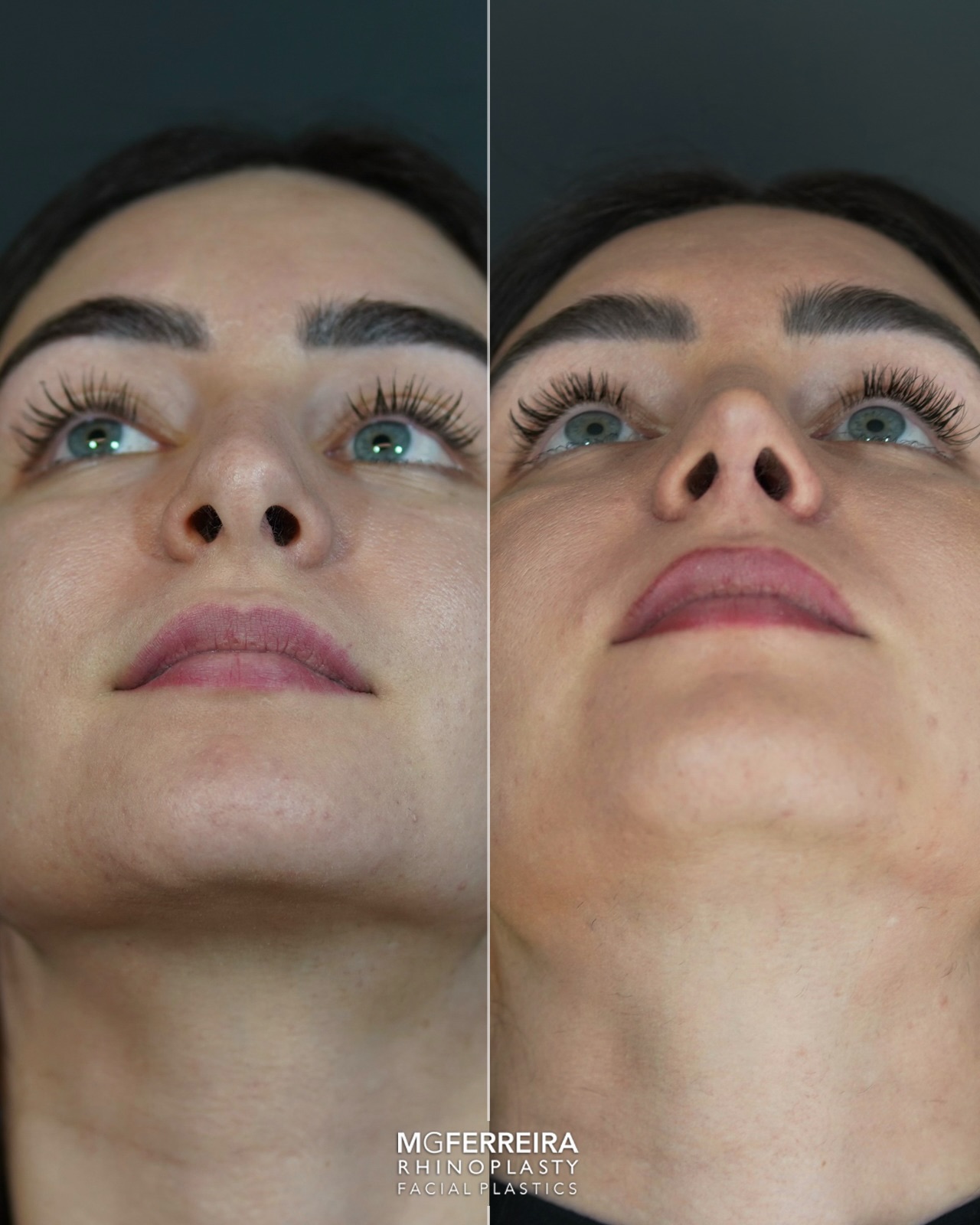
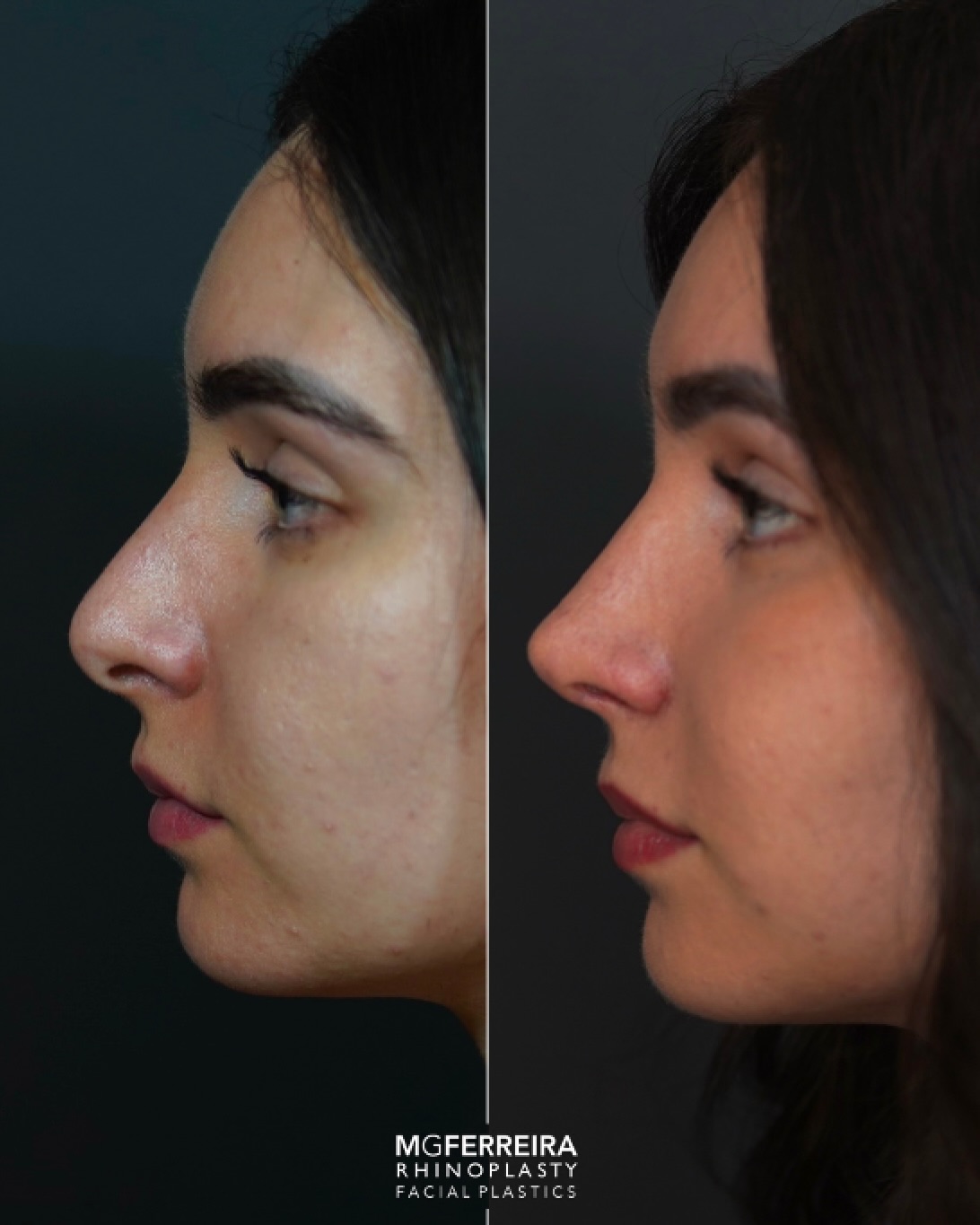
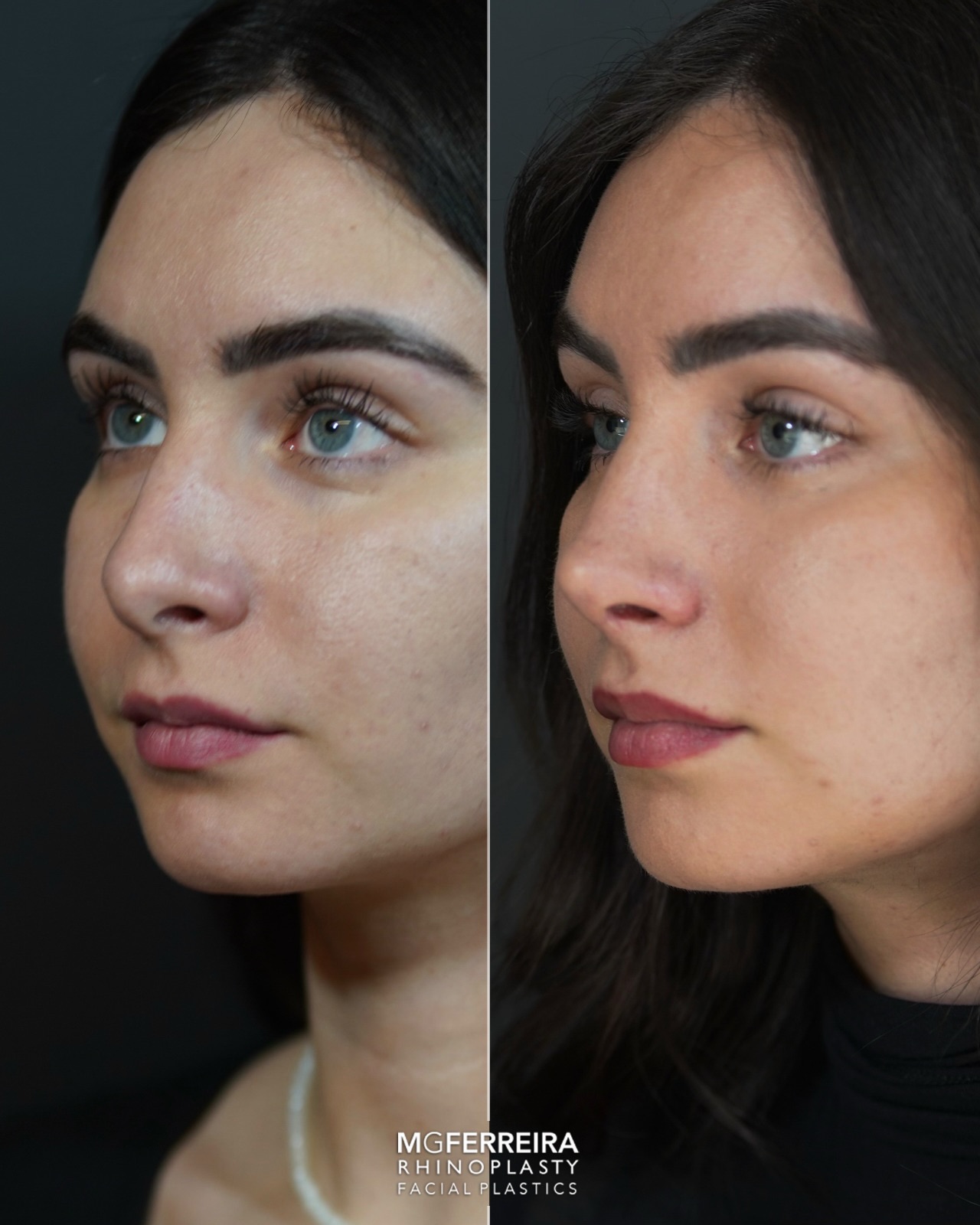
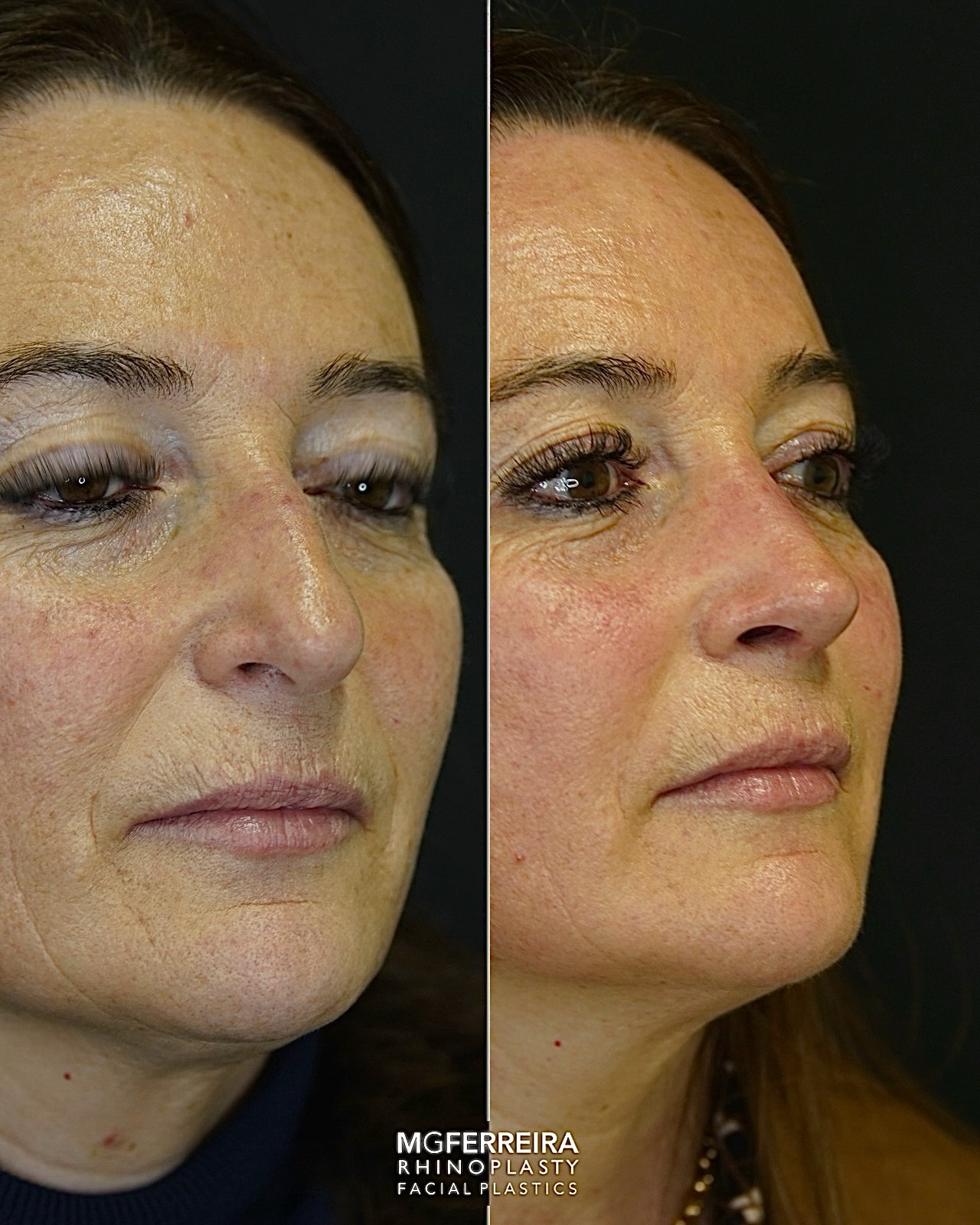
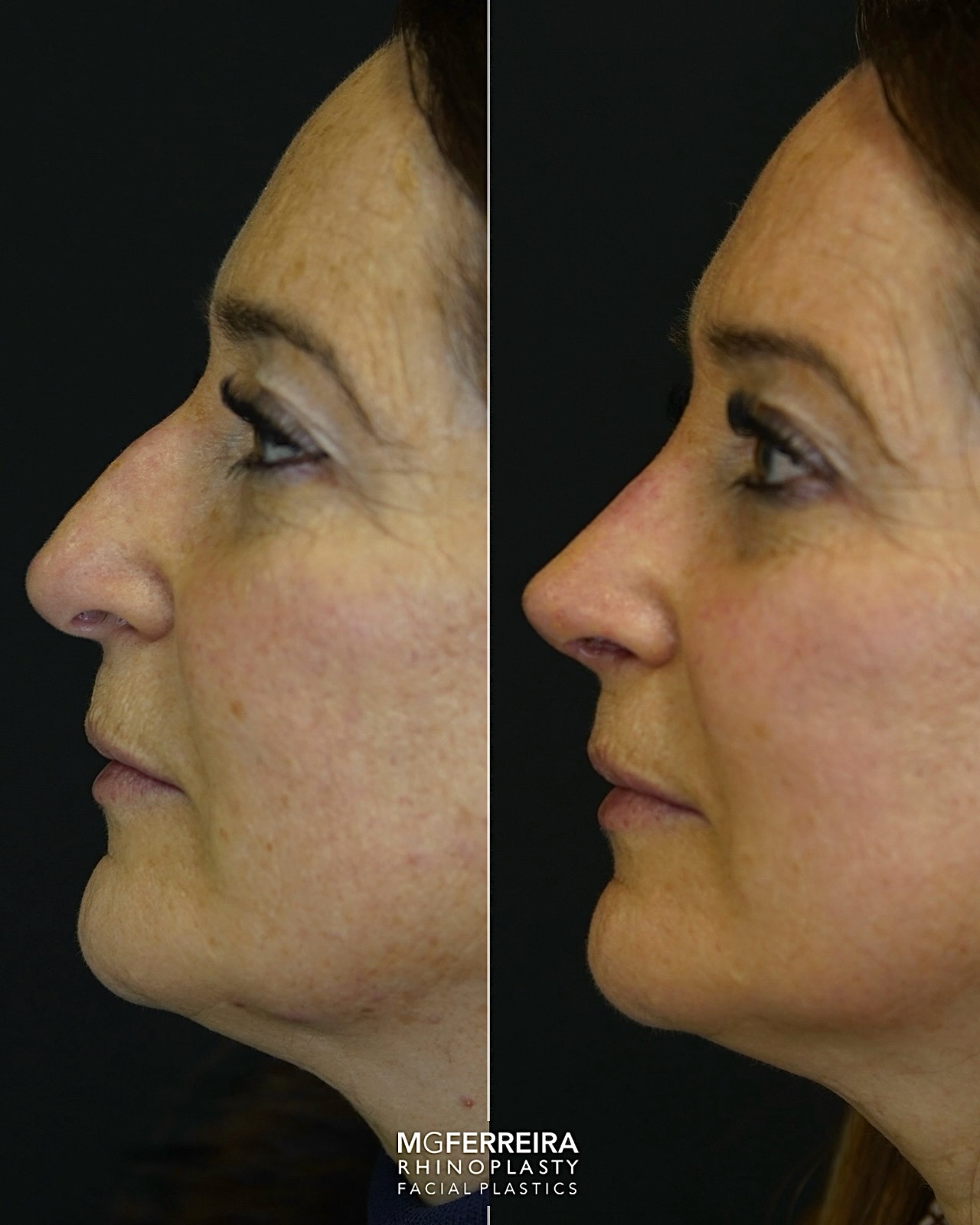
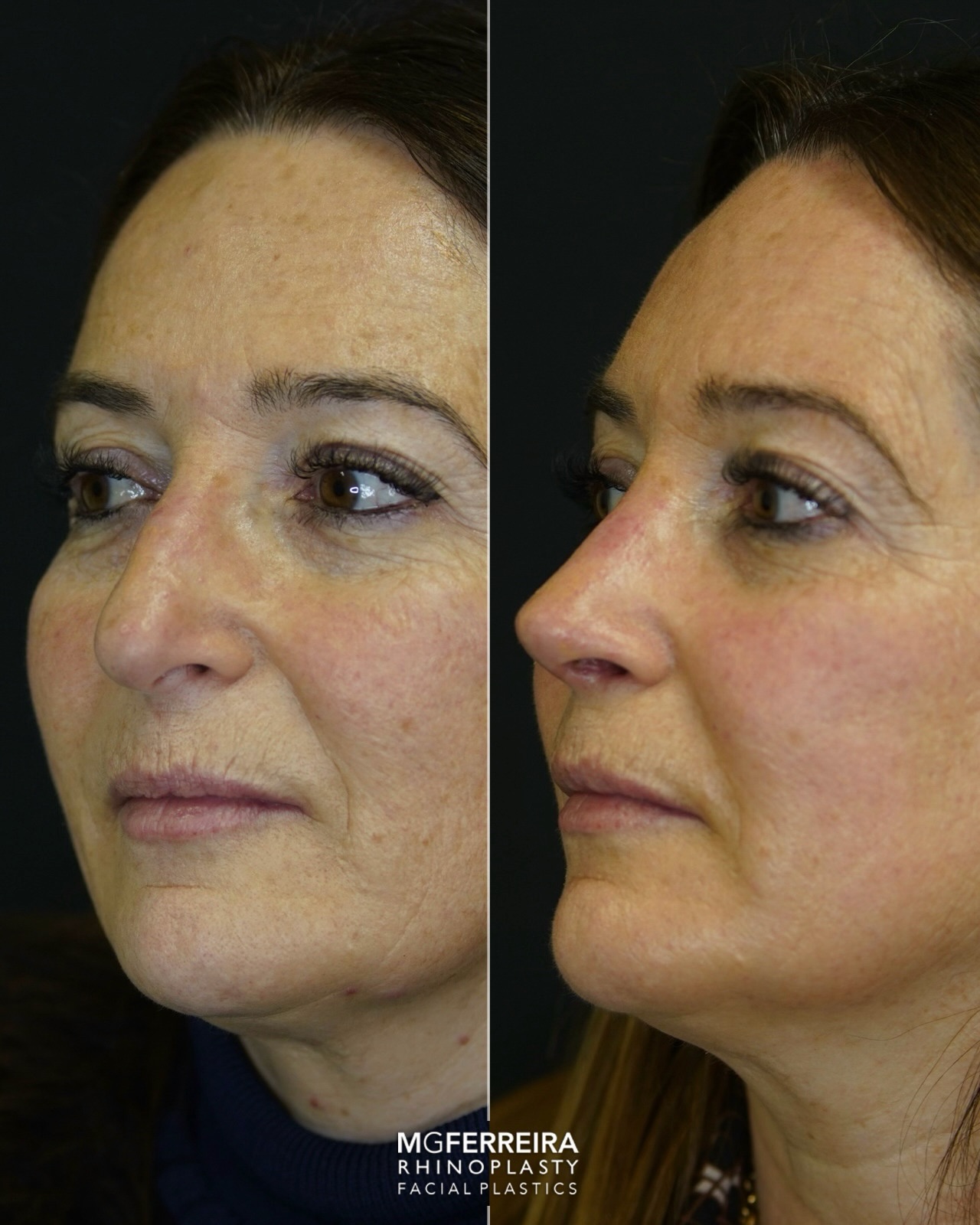
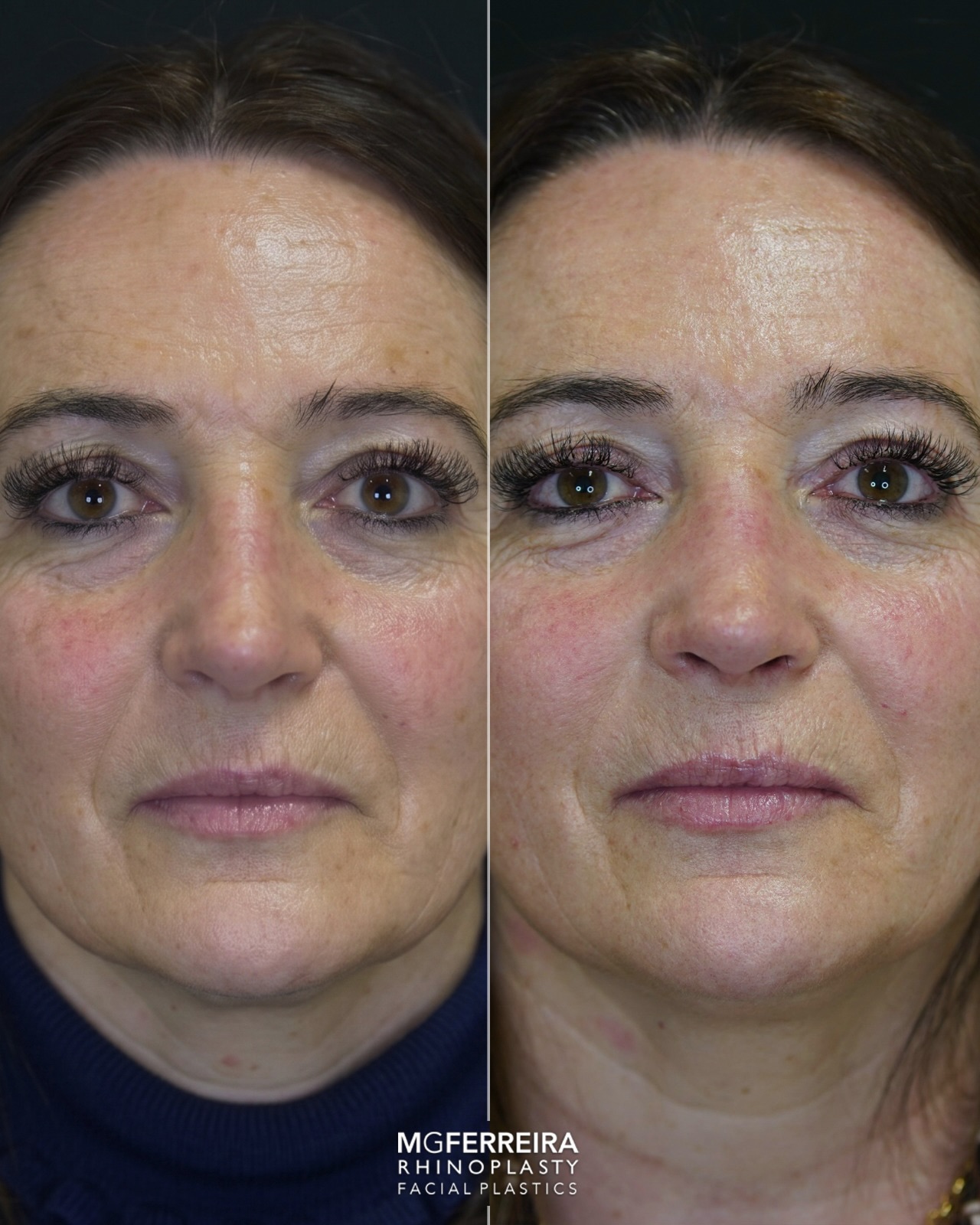
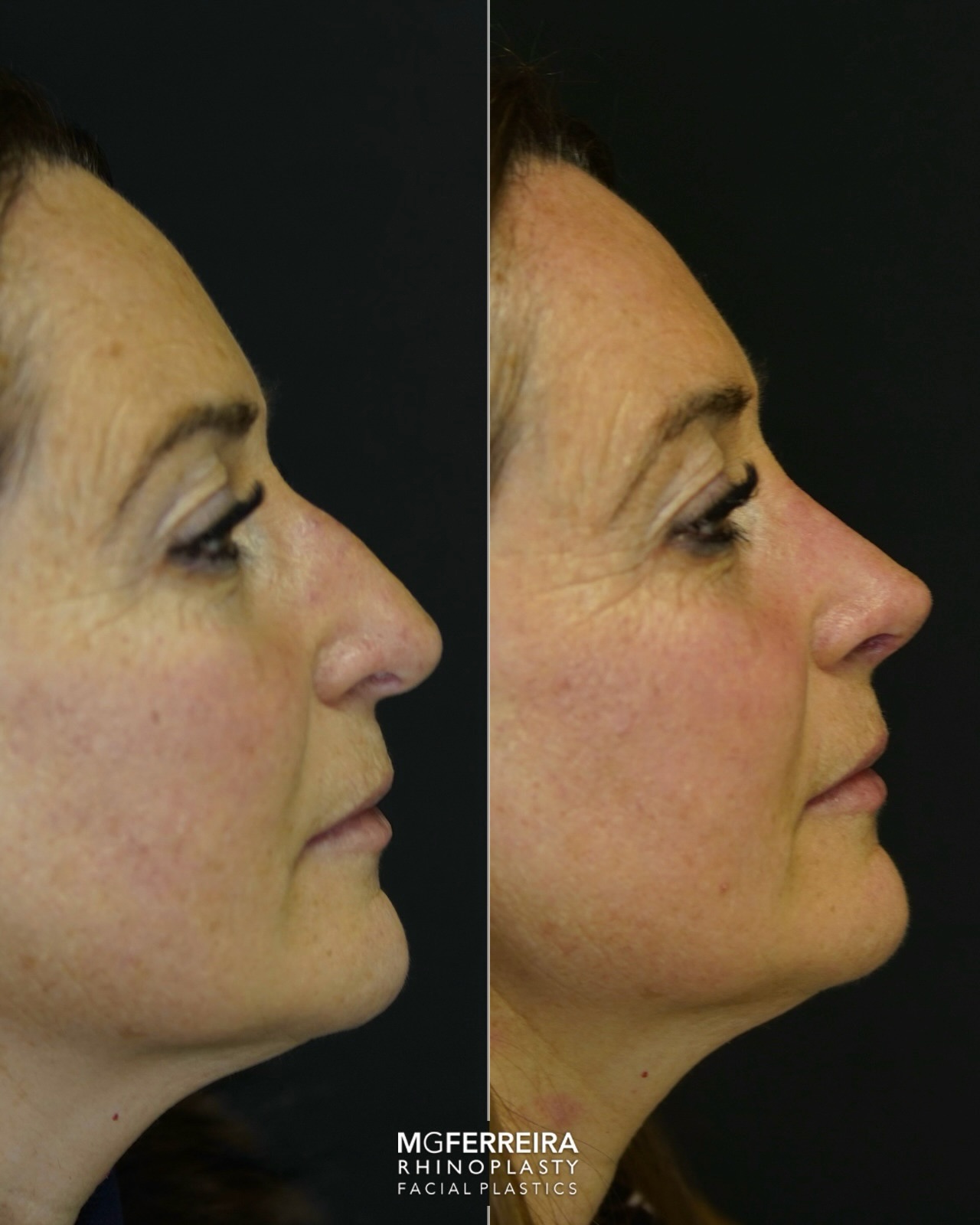
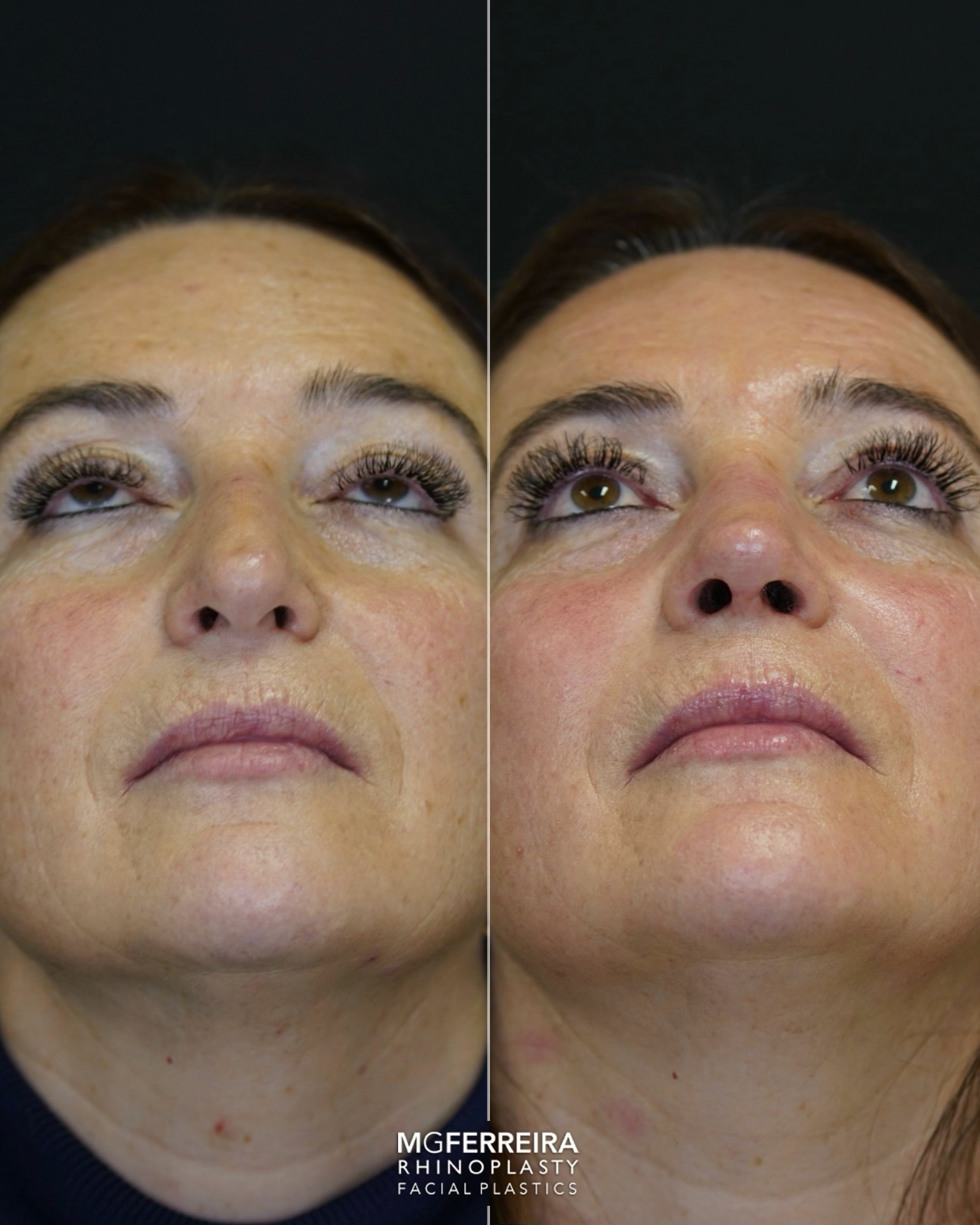
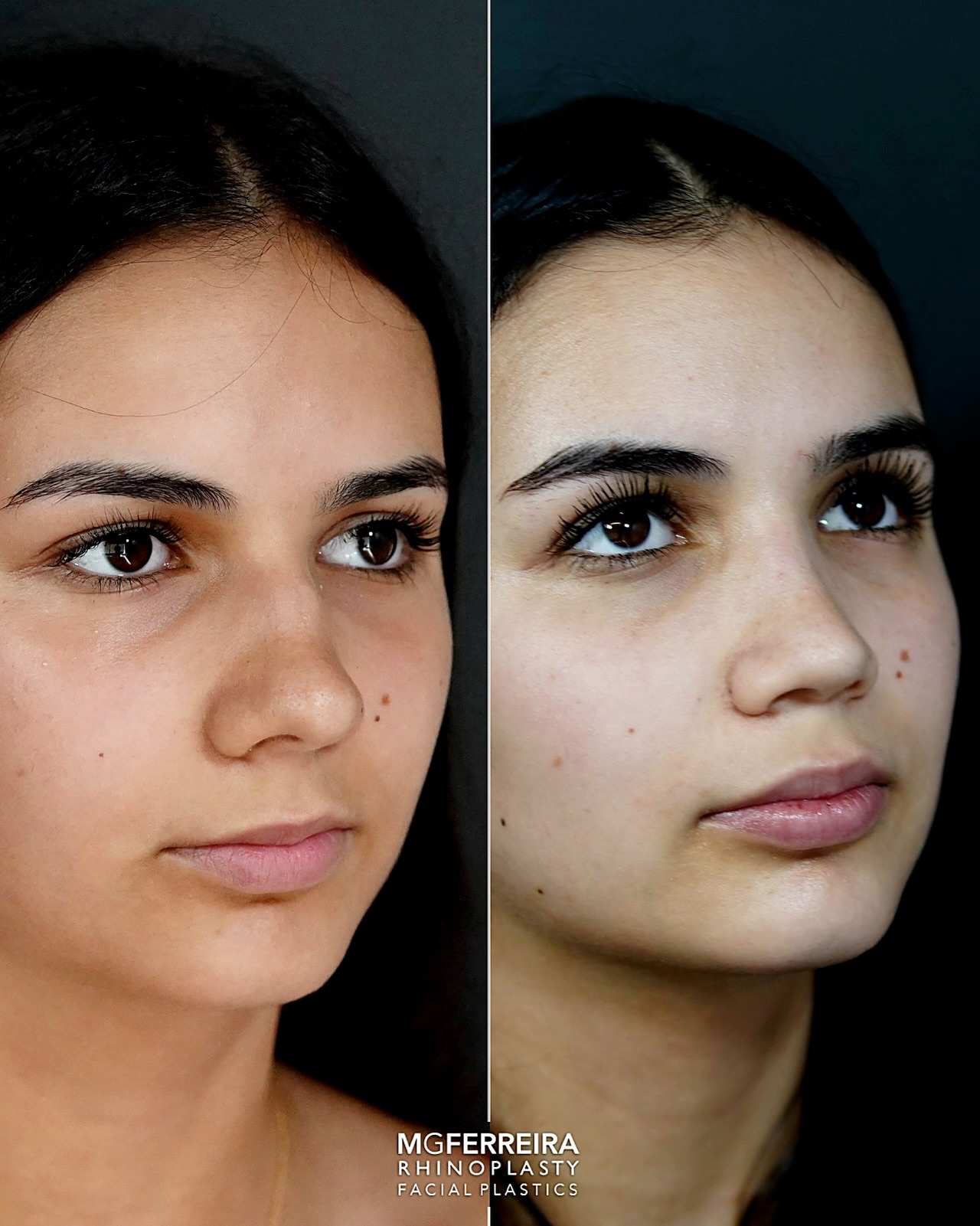
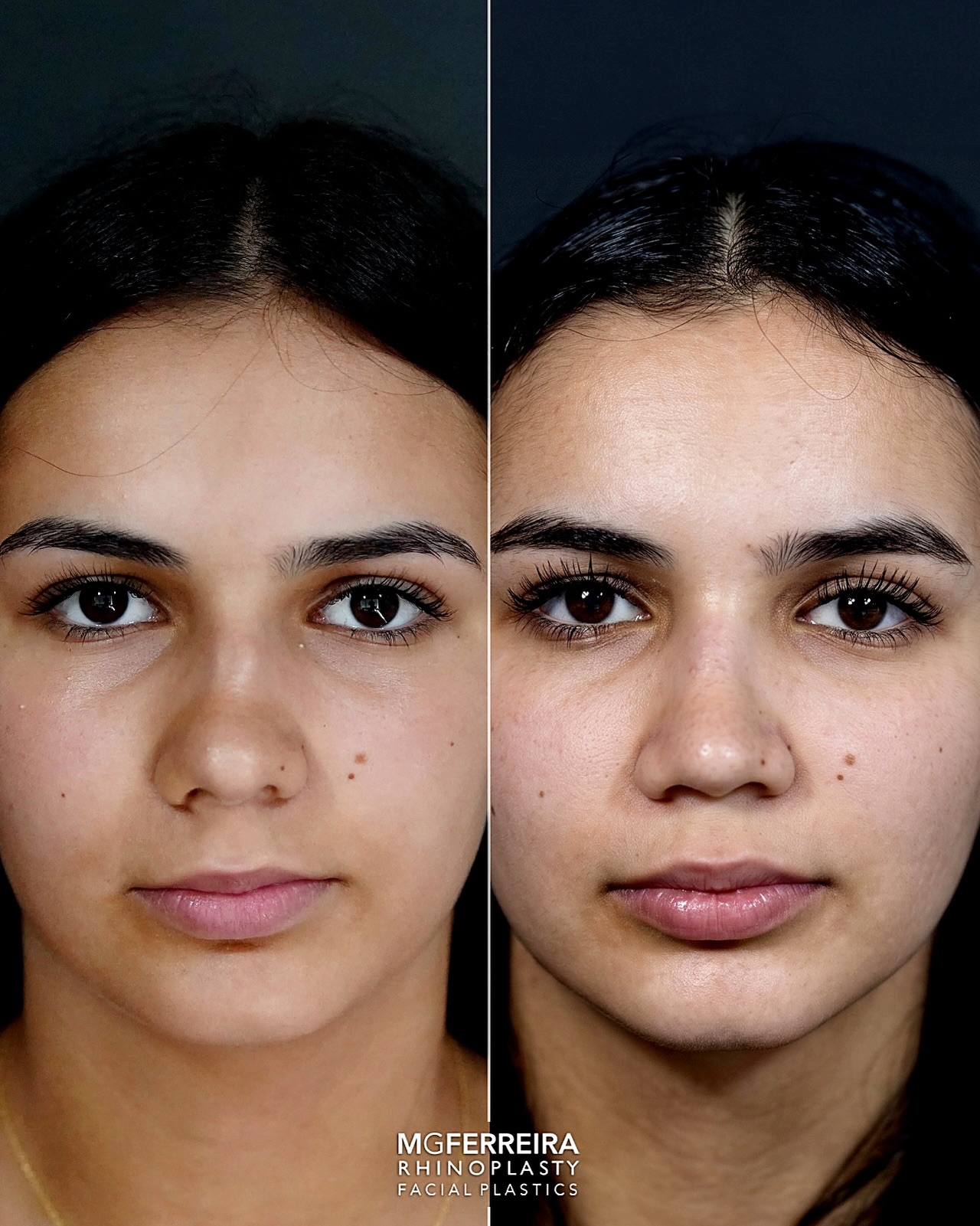
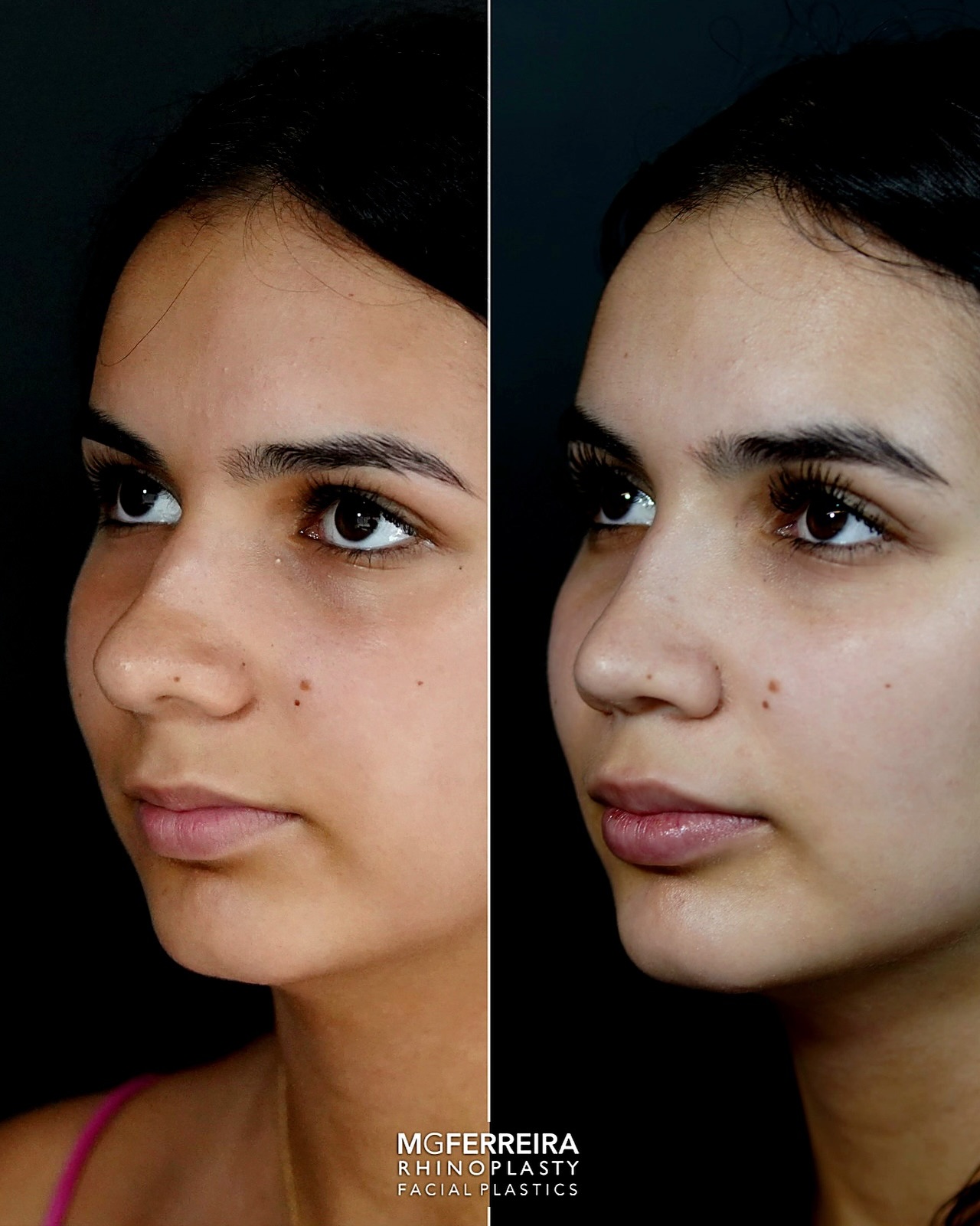
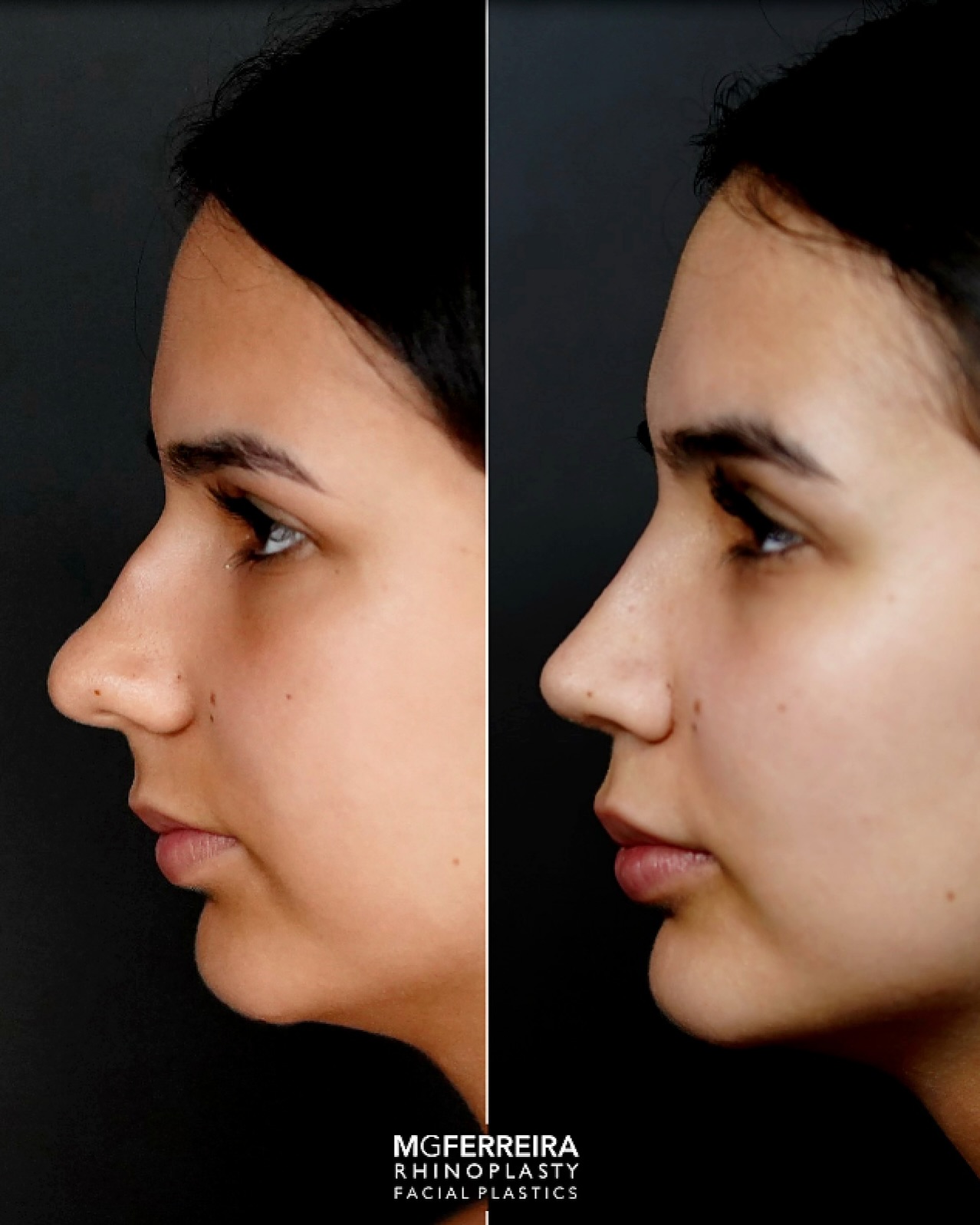
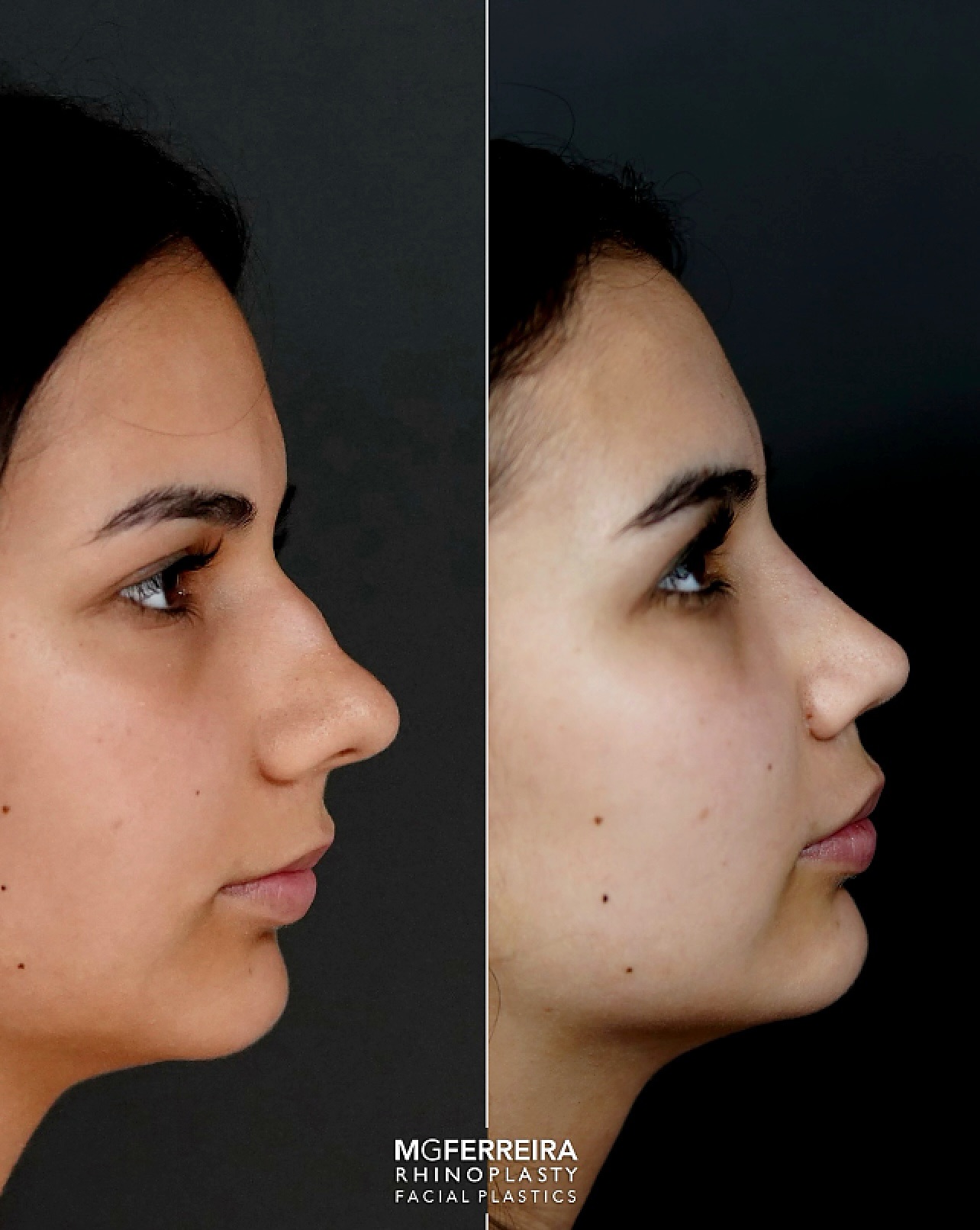
Aesthetic Nose Correction
Testimonials
How is Rhinoplasty performed?
Rhinoplasty is a complex surgery that requires knowledge of the anatomy and physiology of the nose as well as a long learning curve. The nose is a pyramid with an extremely important function. It is made up of cartilage, bone, mucosa, muscles, fat and skin.
Usually, the whole surgery is performed from inside the nose, leaving no scars.
However, sometimes a small incision at the base of the nose (columella) is needed to “open” the nose and reach all the structures more easily. This scar is practically imperceptible.
Aesthetic Nose Correction
Septorhinoplasty
Also known as septorhinoplasty, this is a complex surgery that should only be performed by surgeons with advanced knowledge and appropriate training.
It is an extremely rewarding surgery for the patient and the surgeon when the results are those defined beforehand, so you should discuss your case with specialists.
You can now clear up your questions through a video consultation focused on rhinoplasty.
Get your assessment without leaving home.
Aesthetic Nose Correction
Rhinoplasty Recovery
O rhinoplasty recovery in most cases involves practically no pain: there is some discomfort, which is usually managed with paracetamol.
In the days after surgery, you should avoid physical exercise and very hot environments.
After surgery, pain is controlled with paracetamol; this period is not painful, it is more discomfort than pain.
You will be able to breathe through your nose from the end of the surgery if you follow the instructions given. Many patients still suffer during recovery because of outdated techniques that are still used today but no longer make sense.
For a complete guide, read the article Rhinoplasty recovery: what to expect week by week.
Still deciding? Also read how to choose a rhinoplasty surgeon in Porto, what the first rhinoplasty consultation is like, how long rhinoplasty takes, how much rhinoplasty costs e how the Crisalix 3D simulation works.
The normal course of recovery depends on 3 factors: the surgeon, the patient and healing capacity. Please see the two diagrams in attachment 1, attachment 2.

Porto practice
Book your Rhinoplasty Consultation in Porto
Want to clear up your questions about rhinoplasty or have a facial simulation? Book your consultation at our Porto practice: Rua Orfeão do Porto, 52, 4150-798 Porto, or call +351 915 808 584. If Braga is closer to you, see the rhinoplasty in Braga page or read more about rhinoplasty.

Rhinoplasty in Porto
Experience and technique
Surgeries take place at Hospital da Luz Arrábida, in Vila Nova de Gaia, and at Hospital da Ordem de S. Francisco, in Porto. Prof. Dr. Miguel Gonçalves Ferreira has been operating since 2001, has performed more than 9,000 rhinoplasties and currently performs between 200 and 300 a year.
In primary rhinoplasty, the technique of choice is preservation rhinoplasty, developed by Prof. Dr. Miguel Gonçalves Ferreira himself and taught to surgeons from over 40 countries: the nose gains a new shape while keeping its natural “roof”, which gives more natural results and less swelling. In revisions of surgeries performed elsewhere, which account for around 40% of the cases he operates on, a structural approach is used. Read more about revision rhinoplasty and see the career of Prof. Dr. Miguel Gonçalves Ferreira.
Nose plastic surgery, rhinoplasty, is an operation that improves the shape of the nose. There are two types of “crooked” noses: those that result from an accident and those that grew “crooked”. From the nasal surgeon’s point of view, the word harmonious is preferable (more crooked means less harmonious).
The aesthetics of a nose cannot be separated from the face it belongs to, so the goal of this surgery is a nose in harmony with the rest of the face.
Rhinoplasty is a procedure that requires a well-informed patient. It is a surgery with some limitations and very well-defined purposes, so the candidate should know exactly what they want and what can be done for their nose. You should discuss with the surgeon all the possibilities for aesthetic improvement of the nose through rhinoplasty.